Sunday, December 9, 2012

Up on the Rooftop


The spirit of the Christmas season engenders a vast range of emotions.  Excitement blooms as trees claim their traditional places, anticipation for Christmas morning permeates the young and the old, anxiety festers at the state of the checkbook, melancholy lingers for those Christmases past.  Odd as it is, just yesterday the Christmas season delivered a new, unfamiliar emotion to me - fear.  
I am not normally a fearful person, regardless of the season.  I work to keep an even keel, avoiding situations that might encourage a fear response, staying centered emotionally when presented with a fear inducing problem.  Fear is such a negative emotion, I avoid inviting it into my life.  In fact, I actively pursue the opposites of fear - calm certainty, joyful appreciation, loving anticipation of the uncertain.  In my experience, these are much better approaches to living life.

Most fear responses seem to come from the unknown and uncertain.  Fans of scary movies would tell you that the fear response is created in the audience by not knowing what is behind the glowing door.  As soon as the door opens and the monster is revealed, the emotion shifts from fear to something closer to fright.

Our imaginations are creative powerhouses.  They have built this amazing world in which we live.  But, along with the our creative inventiveness comes the specter of the unknown.  What lies behind the door gives rise to terrifyingly creative answers, most which are profoundly more fear generating than whatever CGI inspired creature inevitably shows up.

My fear response did not have to do with scary movies or real life hauntings.  In fact, as mentioned before, I encountered fear while participating in a pillar of the Christmas season - hanging lights on my roof.

In the five Christmas seasons since Samantha and I moved into our house, I have hung the lights once before, two years ago.  This year, I followed the same process as before.  I used an eight foot ladder to reach the lip of the roof, climbing carefully over the gutter.  Once on the roof, I laid the lights down and reviewed the plan.  While I am sure we do not have the steepest roof ever built, it certainly felt steeper than the last time I was up there.  I quickly, but safely, climbed to the first peak and took a seat, surveying the neighborhood.  After enjoying the cool breeze for a few minutes (it was 82 degrees outside), I began scouting the roof.

My memory of being on the roof before has me scurrying all over the place with full confidence in my safety.  I scrambled up to the peaks, crab walked down to the edges of the roof unreachable by ladder, and was generally unconcerned.  This time, this was not the case.  After slipping and sliding to the second peak, I sat there for quite some time.  In my mind, I was trying to convince myself that I was taking my time to formulate a plan for hanging the lights.  

In reality, I was too scared to move.

My feet had been sliding more than I remembered and my shoes didn’t seem to have the right grip.  The drop to the ground seemed further.  The angle of the roof seemed more steep.  Nothing seemed to feel right.

So, I did what any man would do.  I sucked it up.  Well, for a moment, anyway.  I slid out to the front-most peak, straddling the point, and hung some light holders underneath the shingles.  I wasn’t quite shaking, but I was definitely not comfortable.  After retreating back to the safety of the center of the roof, I looked around again, weighing my options, telling myself I wasn’t going to give up.  I slid my way back to the ladder and climbed down, defeated.

Feeling fear in this way was unfamiliar and it made me ask some questions to which I am not sure I knows the answers.  Was it fear or intuition?  What is the difference between fear and intuition?  Are they related?

I am a big believer in following your intuition, and there is definitely a part of me that says intuition played a large part in getting off the roof, but I have to wonder, can irrational fear influence the perception of an intuitive response?  I think so.  I think it is important to make sure we know the difference between the two responses and how they relate to each other.  Unfortunately, that takes practice encountering fear, which is not something I am interested in pursuing.

Either way, whether intuition, simply fear, or some hybrid of the two, the oak tree and the bushes in front of my house now look quite festive.  

Sunday, November 25, 2012

Today not Tomorrow

- Pope John Paul II

I am the kind of person who has the unfortunate habit of living for tomorrow instead of today.  Occasionally, I enjoy rare bursts of inspiration when tomorrow and today merge, and instead of continuing to put off today’s work until tomorrow, I live for today and take care of my business.  I have to admit, I would much rather live a life full of today’s than tomorrows.

The even more unfortunate truth is that I am certain I am not alone.  Neither am I in a small minority, or even a large substrate of the population.  The people who live for tomorrow instead of today permeate our existence, leaving those who choose today to enjoy the many fruits of this world.  Those of us who sometimes overcome our silent pledge to procrastination occasionally taste the joy the world offers when we power through the resilient bonds we have placed around ourselves.  
- Latin for "seize the day"

We begin to develop the terrible habit when we are young, fostering our addiction like a newfound pet.  I will put my toys away later.  I will brush my teeth in the morning.  I will do my chores after this TV show is finished.  Eventually, minor delays become major obstacles to moving forward in our lives.  School work succumbs to the inevitable; we choose to sacrifice the quality of our work for some simple pleasure that ultimately, if examined further, will turn out to be trivial at best.
- Robert Kiyosaki
Our youth fails to fend off the infection and by the time we are adults our fault has real consequences.  How many have put off paying bills until you get the late notice accompanied by a significant late fee?  How many of us have put off an auto repair until the car dies?  What is a credit card but a way of paying for something later that we want now.

How many people do you know, including yourself, who put off discussing something important with a loved one until too late.  The results can vary from broken relationships or unwanted pregnancies to death.  Most of the time biting the bullet and getting it over with is the better decision.

Ironically, I began this blog last Sunday but ran out of time before lunch.  Did I return to in and finish that afternoon?  No.  Did I have time and choose to do something else of lesser consequence?  Yes.  Have I had time since then?  Yep.
Now, I am not suggesting we avoid taking times to do what we want instead of what we should.  Making decisions about our life is part of free will.  I am asking you to reflect upon your decisions and actions and decide how they are made.  Do you actually live by free will, or are your decisions determined by a series of earlier actions that lead to an addiction to procrastination.  I can understand any reluctance you might feel.  

Turning the magnifying lens on ourselves is often quite hard because we have to admit our faults.  But, I think it is an important step towards leading a happier existence.  So, take some time today and look back at yourself.  Or, maybe you can do that tomorrow?

Sunday, November 11, 2012

Earn This


One of the strongest emotional tugs a good story delivers to my heartstrings centers on the idea of personal sacrifice.  Frequently, at the end of a movie or during the climax of a novel, I find myself a blubbering mess as the hero gives up everything they are in order to save others.  Even now, reflecting on some of the most powerful scenes, my eyes glisten slightly.  Of course, nothing Hollywood or the publishing industry can do will ever be as powerful as real life sacrifice.  Giving of yourself to save and protect others is one of the most honorable actions a person can take.  There is no better example of an organization that exemplifies this idea as the United States Military.  Thank you Veterans for the sacrifices you have made to keep us and our way of life safe.

The word sacrifice too often implies the giving up of ones life in order to protect others; this definition is much too limited.  There are many ways a person can give up their life to serve without having to die.  These sacrifices must be honored as well.  

Veterans and current service men and women give up choice for much of their life.  They live where they are assigned, relocating many times during their service.  If on assignment or deployment, they spend months at a time away from their loved ones.  If in a combat arena, they go about their duties with the knowledge that they may never see their families again.  Yet still they serve, putting our lives ahead of theirs.  

Many Veterans have sacrificed their health for this country and its people.  From those who have returned from deployment with bodily injury to those who come back uninjured physically yet suffering mentally, our Veterans put themselves at risk for us.  Their constant vigilance despite the risk to themselves deserves our recognition and thanks.  It takes a powerful person to knowingly step into a career in which their entire life will be driven by the level of sacrifice their country asks of them.

There are also the few who do give the total sacrifice, giving their life for ours.  While too many of the men and women have have died in service of our country are faceless unknowns to the rest of us, their sacrifice is no less, their honor heightened rather than diminished due to their anonymity.  They do not serve to achieve acclimation and fame.  There is no promise of TV time or a book highlighting their life.  They go about their service for that purpose alone - to serve.

Veterans are special people and they should be recognized as such.  Whether they are serving now or last wore their uniform decades ago, their choice to enter the armed forces was a choice to sacrifice for you and for me.  They don’t know us just as we might not know them, yet with every breath during their service, they lived and died to make sure our lives could be lived free.  Though all of their names may not be inscribed on a memorial, the memory of how they live should be written on our hearts.

While I said before Hollywood comes nowhere near close enough to the idea of real life sacrifice, at least they can offer the rest of us a guide on how to live our lives to honor that sacrifice.  In the final scenes of the 1998 film Saving Private Ryan, Tom Hanks' character Captain Miller leaves Private Ryan with words the rest of us should live by - "Earn this."

Sunday, November 4, 2012

A Splash of Color


Autumn 2011 was one of the most memorable Autumns since the Houston area became my home.  Everywhere the eye gazed, trees exploded with a cornucopia of color.  Reds, oranges, yellows, and innumerable shades unfamiliar to our mediocre falls flashed among the evergreens.  Every time I stepped from my home, my eyes immediately flew to the trees, eager to drink in the color.  Why did we have such a splendid display?  Because the trees almost died.

When I first heard the reason, I found it odd.  Why should we experience a glorious Autumn simply because Texas had sustained one of the worst droughts in its recorded history?  Apparently, the stress of limited rainfall over an extended time period induced the trees to show off their abilities.  I like the idea they were celebrating their continued life, the flame hued foliage playing the same role as our fireworks.

What I wish mine would look like.
Those of you who have visited my home have probably noticed the monstrosity of a bougainvillea nestled along the front walkway.  For most of the growing season it looms along the entryway, long tendrils reaching lush foliage along the house.  Unfortunately, it only blooms in the fall and I am constantly battling it to bloom sooner.  The way to generate early blooms?  Chop the roots and deprive it of water.  After enough time, the poor plant thinks it is going to die and it shoots out blooms as a last ditch effort to propagate.  Of course, the responsible gardener will never take it too far, preferring the colorful blooms to an over-stressed pile of dying vines.

How many of us have experienced similar circumstances?  Deprived of that which sustains us, the universe will frequently present seemingly insurmountable challenges.  Regardless of who you are, being dumped into the crucible happens from time to time.  Look to the trees for answers.  

I recently watched the 1997 Michael Douglas thriller The Game.  Douglas plays the perfectly uptight, super rich, power driven, A-hole he seems to have mastered in many film roles.  His character is given a “game” as a birthday present which throws him into a series of scenarios challenging the very core of his personality.  Through the drama, he is stripped bare; everything he holds dear is taken from him until he has nothing.  It is only then that the game ends, returning everything to a man who has an amazing new perspective on life and a fresh appreciation for the people who share his experience.

While I have never experienced anything as extreme as the character in The Game, my front door bougainvillea, or the Texas trees, I know the universe has thrown me into some tough situations before.  While in the free fall to the bottom, I surely had a difficult time keeping my eyes on the positives.  Hopefully there isn’t a next time, but if there is, I will be sure to recall the lessons learned from the 2011 drought.

Stressful situations will appear in our lives.  We will experience challenges.  We will fail.  We have to know that we will always rise again.  Shake off the shackles of negativity and embrace life.  Follow the example of the trees and celebrate your resurgence with a splash of color.


Sunday, September 16, 2012

Changing the Radio


A commercial from my youth stuck with me through the years.  It didn’t resonate with me through poignant humor, over indulgent sexuality, or even for the product it was selling.  Instead, this particular commercial lodged itself in my memory through shock value and a message that is incredibly applicable to today’s society.  The punch line of the commercial - “John didn’t like the song on the radio, so he killed a little girl.”

For those of you who never had the opportunity to see this commercial, let me set the scene.  A young man drives down a typical suburban street jamming to the radio.  The mood is bright and happy.  Everything is fantastic.  The guy decides to change the channel, and as he looks down at the knob, a little girl runs out in front of his car.

Sad, I know.  

If I remember right, there might have been a series of commercials like this.  Or, maybe my brain has just been running with the idea, creating its own series of commercials that  could have worked.

“Ricky wanted the air conditioner on, so he killed a young boy.”

“Gerald decided to spit his gum in the wrapper, so he drove over an old lady.”

“Sarah couldn’t wait to get home to taste her french fries, so she murdered a father of three.”

The implied rationale is that driving contains a certain amount of danger; pay attention while doing it.  More often than not, the old commercial pops into my mind while driving through my neighborhood.  We have a nice running loop frequently populated by fitness enthusiasts, little kids on bikes, and parents with strollers.  The nicer the weather, the more people you will see.  Unfortunately, it is the people you don’t see you have to worry about.  I make sure to keep my eyes peeled.

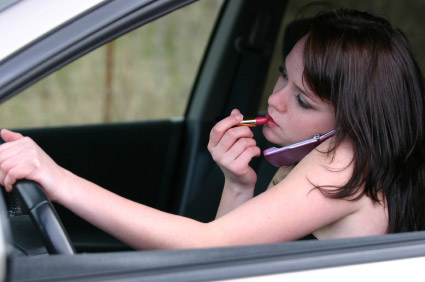
In today’s tech heavy society, the idea of being aware while driving is even more pertinent.  The distractions of today are extremely commonplace.

“Harold wanted to dial his mom on his phone, so he ran over a pregnant woman.”

“Jillian wanted to text “;-)” to her best friend, so she killed a little boy who just turned three.”

“Brian was interested in whether or not it would rain, so he crushed a jogger pushing a stroller.”

The stark juxtaposition of two contrasting desires shocked me as a young person and shocks me still as an adult.  We are never 100% certain of the results of our actions, nor can we imagine the infinite possibilities stemming from any one of our decision.  Of course, remaining aware of our surroundings, acting responsibly, and being safe, reduces the changes of situations like these from arising.  

Please don’t assume I am perfect.  Despite the haunting memory of the commercial hanging over my head, I still have lapses in sound judgement.  As much as I loathe myself for doing so, I will occasionally pen a text or fumble for directions as I drive.  Usually, I realize what I am doing halfway through and reprimand myself for it. 

I have plenty of hypocritical moments when I see others staring intently at their phones as they drive.  I scold them internally, aware of my hypocrisy, hoping that I won’t make the same error in judgement again.  Maybe I won’t.  I hope not.   I have no desire to be in a commercial.

If you are unsure of whether or not your actions are dangerous, paint them in the stark contrasts provided by the commercial.  Is your email as important as the life of a child?  A family?  An old lady?  Anyone at all?  If it is truly urgent, pull off the road.  Find a gas station, a strip mall, a restaurant parking lot, where you can stop your car and take care of your business.  Otherwise you risk making the terrible choices illustrated above.

Sunday, September 9, 2012

A Whole Nother Perspective


Nother.  I honestly have no idea to spell this “word.”  Is it nuther?  Or would it be nother, as its origins would suggest.  Maybe knother with a silent k?  For the longest time, I regarded this word with contempt, annoyed at what I considered an unnecessary mutation of our perfect English.  Wow.  How arrogant and pretentious was I?

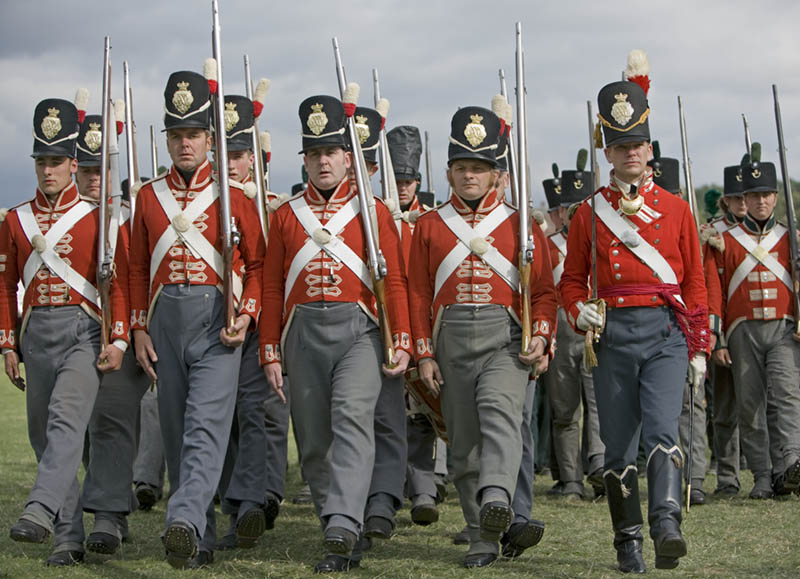
I have long been one of those people who quietly laughs on the inside at pre-American Revolutionary movies in which the American colonists speak with perfectly formed American dialects, albeit minus such fine words as nother, a’int, or y’all.  The colonists were first, second, or third generation European immigrants, generally residing in homogenous clusters in which accent mixing rarely happened.  A significant portion of the population was English born or raised and surely sounded no different than their evil  Red Coated counterparts.

Hopefully the Brits discovered camouflage. 
Well, at some point during the last 236 years our languages diverged.  We don’t drive lorries, take trips to the loo, or snog our loved ones.  We eat our biscuits with gravy and not tea.  Our chips come in bags instead of accompanied by deep fried cod.  Frankly, I think those Brits sound crazy.

While living in London in 2003, I had the opportunity to make friends with some of our stage crew.  Every now and again, they would rip off a sentence sounding mostly of gibberish, full of dropped consonants and unimaginable slang; we would have to remind our English compatriots to speak English and not British, otherwise there was no way to understand them.

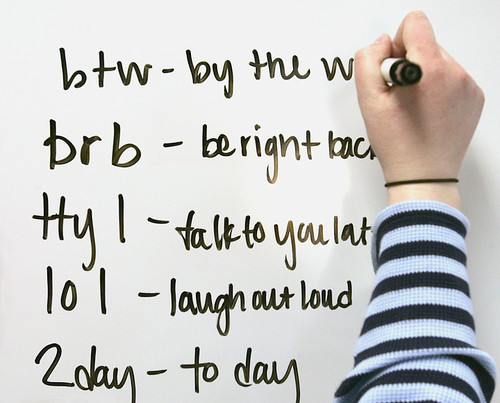
All of our languages evolve as culture grows and changes.  As much as we look at our younger generations with mild amusement for introducing text-speak into conversation, filling our ears with such gems as “tots,” “loled,” or “brb,” they are providing us with a window to the future of American English.  As our world continually shrinks thanks to technological innovation, our cherished language will open its doors to even more intrusion from outside sources.  

I remember the ebonics craze from a few years ago when the Oakland School Board decided to teach Standard American English by using African American Vernacular English (commonly referred to as ebonics) to bridge the gap between the dialect used at home and the one regarded by educational institutions as correct.  The technique is no different than using English to help a high school student learn German, French, Latin, Spanish, etc.  We have to create a bridge between the established knowledge and that which we wish to teach.

Now, let me provide a whole nother example.  My own distaste for improper language usage has evolved as well into something more than tolerance (which frequent readers know is a term I dislike).  Using terms such as nother, tumped, a’int, y’all, fixin to, or contained in text speech, or any other slang based terminology, does not reflect on the speaker’s intelligence.  These words are merely familiar to the person’s experience.  They use these words because they encounter them frequently.

My time in London didn’t grow my vocabulary, but it did alter the way I pronounced a few words - sorry and strawberry being the most notable.  Sorry altered from s-are-ree to s-or-ree and strawberry somehow became - straw-brerry.  I only spent four months immersed in British English and remained surrounded by Americans speaking American English, yet it still impacts my speaking skills nearly a decade later.  Imagine only hearing one slang dialect for the first five or six years of your life.  Does slang usage reflect upon intelligence?  I think not.

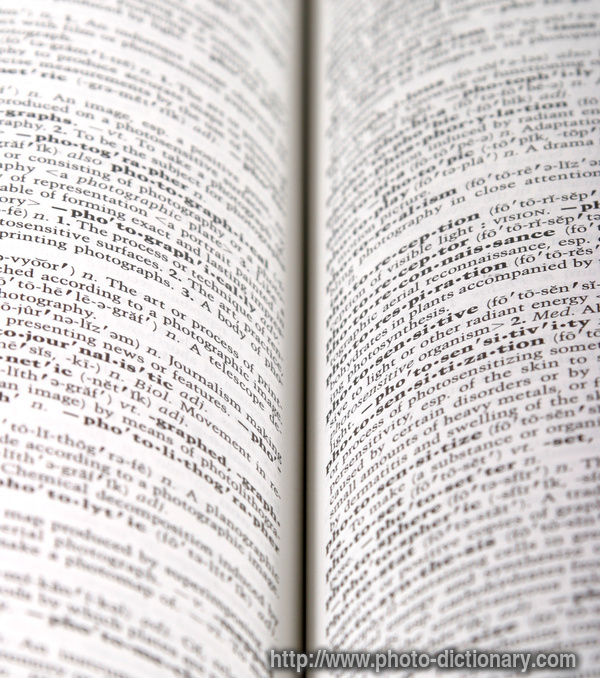
Funny enough, in writing this, I discovered that Merriam-Webster includes nother as a word in its lexicon (although spell-check doesn’t seem to agree).  This year, the dictionary standard expanded its catalogue to include other commonly used terms - man cave, sexting, mashup, bucket list, and underwater (referring to mortgages).  

Our language constantly evolves.  Usually we evolve right along with it, not ever realizing we have done so.  So, the next time you hear someone use a word you have never heard, before jumping in to correct them, consider adding it to your own list of favorites.  You may find yourself evolving ahead of the curve.

Sunday, September 2, 2012

A Turd with a Bow


As the road to November 6 stretches on and on and on . . . and on, we find ourselves under constant bombardment by both sides.  Hate and negativity proliferate the airwaves, striving to direct a campaign weary populace towards one candidate or another.  Somehow, through the deluge of spun facts, slight distortions, and outright untruths, our voting population is supposed to pick the party that will lead us down a path to a better America.  Best of luck to us all.

Emotion will win the election, not facts.  Campaign strategists know this and exploit it at every opportunity.  Their job really has two simple aims - 
  1. Energize the base with fiery rhetoric designed to enflame their emotional attachment to the party brand.
  2. Paint opposing pictures of the two parties/candidates using an unequal mixture of fact and emotion to generate a gut reaction in the independent population

This week’s Republican National Convention provided a prime example of both, as I am sure the Democratic National Convention will.  Networks treated viewers to both the Republican All-Stars, standing at the bully pulpit to preach their conservative agenda mixed with the anti-Obama fear-mongering, and the Democratic talking heads (depending on the network), who offered the opposing ideology.  This week, the Democrats will present the yin to the Republicans yang, completing the circle of full cycle campaign rhetoric.

Most people have difficulty expressing their political opinion in a calm and focused discussion.  Usually it breaks down into emotional responses instead of intellectual ones.  This is the way the parties prefer it.  They want us thinking with our stomach rather than our brain.  If the only reason we vote for a specific candidate is the way we feel about them (or the other guy) instead of reasoning through the facts about each of their policies, then the campaign managers have earned their paychecks.  They don’t want thoughtful voters, they want panicked lemmings.

They way I hear it, from all media sources, not just the ones labeled as biased, from the messages in campaign ads, from the candidates themselves, from their PACs and Super-PACs, is that I have a choice.  My choice is limited to one disaster or another.  I can choose between two different economic dooms, two different types of destruction, two different kinds of American apocolypse.

Basically, I am getting a turd with a bow on it, but I get to choose the least offending bow.

Is this the kind of way we should be making our decisions?  Do you want the greatest country in the world run by a man placed there because you were scared of the alternative?  I certainly don’t.  I want this country to head in a direction crafted by thoughtful choice instead of fearful negativity.  Emotion is easy, but thinking will yield greater results.

Consider the facts.  Instead of reacting emotionally to a speech, an ad, or the chopped up soundbites loved by the media, do some research.  Cobble together your own realty-based impression of the candidates and the parties and use your brain to decide who you will vote for, not your stomach.  This is the only way to sort through the maelstrom of partial facts and misinformation thrown at us everyday.

Remember that you are an American.  You have your own voice.  You are allowed to be an independent thinker free of social pressures.  Wade past your emotional responses and find the issues important to you, then think about them.

It is this way that we can ensure America’s greatness.  Otherwise, regardless of the man we choose, or the party we put in power, we are guaranteed an America as the result of emotion tugging campaign managers instead of an America built by the thoughtful will of its citizens.